From a slow leak behind the drywall to a full basement flood, Rainier property owners call Aqua Guard Water Damage because we show up with the right gear the first time — no guesswork, no upsells at the door.
Call +1-844-234-5373 Now
Aqua Guard Water Damage has spent years pulling water out of Rainier basements, crawl spaces, and commercial units, and that hands-on history shows in how fast our crews assess a loss. We know which Rainier neighborhoods sit on older clay pipe, which developments have a history of sump failures, and which zip codes flood first when storm drains back up.
We answer our own phones around the clock in Rainier, which means the person who books your appointment already knows our schedule, our crew availability, and how fast we can realistically get a truck to your address.
Beyond the technical certifications, our crews are trained to communicate clearly under pressure, because a homeowner dealing with a flooded home deserves plain answers, not jargon.

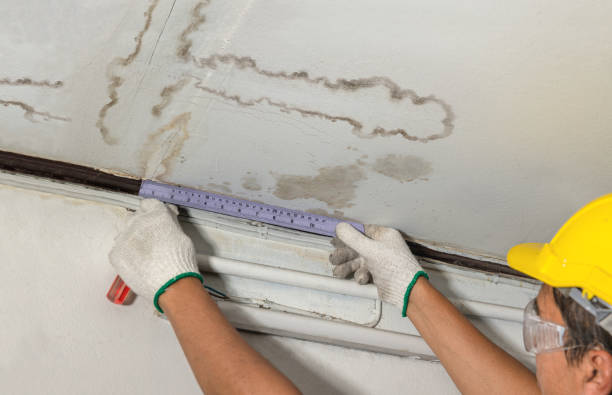
Yellow-brown rings on your ceiling or walls almost always mean water has been sitting behind the surface longer than you think, and the drywall paper backing is likely already feeding mold growth. Waiting to see if the stain spreads only gives moisture more time to travel further into the structure.
Musty odors that seem to follow you from room to room often mean the HVAC system is circulating spores from a hidden wet area, which spreads the problem rather than solving it.
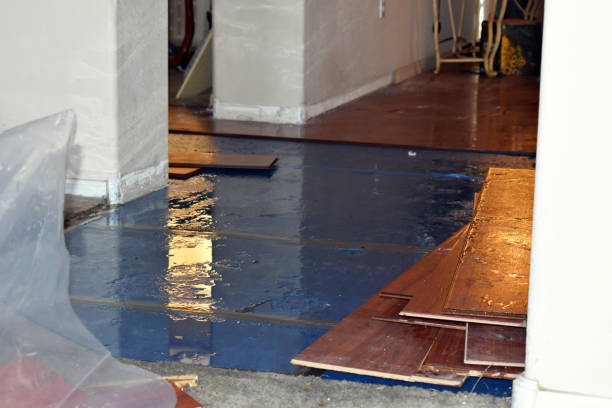
Carpet that stays damp or squishy days after you last noticed water is holding moisture against the subfloor, which is exactly the condition that lets mold take hold underneath.
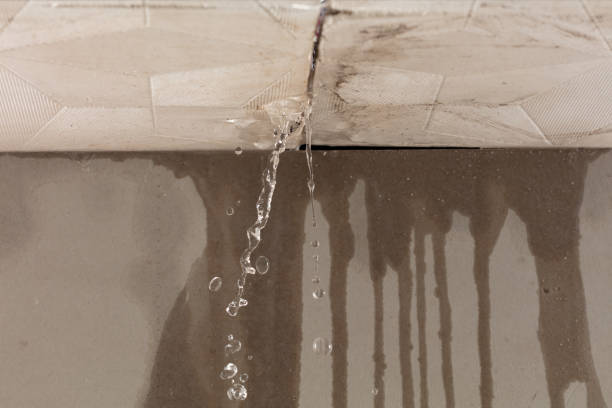
A running-water sound when every fixture in the house is off is a strong sign of a hidden leak feeding your rising bill.
Paint that bubbles or peels away from a wall, especially near baseboards, usually means moisture is pushing through from behind rather than a simple application problem.
Dark spotting in grout lines or around window frames is often the first visible sign of a moisture problem that's been developing for weeks.
Our Basement Flooding process covers every stage of a water loss, from the first extraction pass to the final coat of paint, so you're never left coordinating separate contractors mid-project.
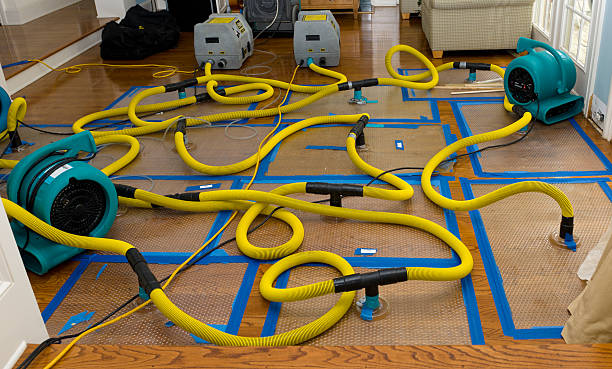
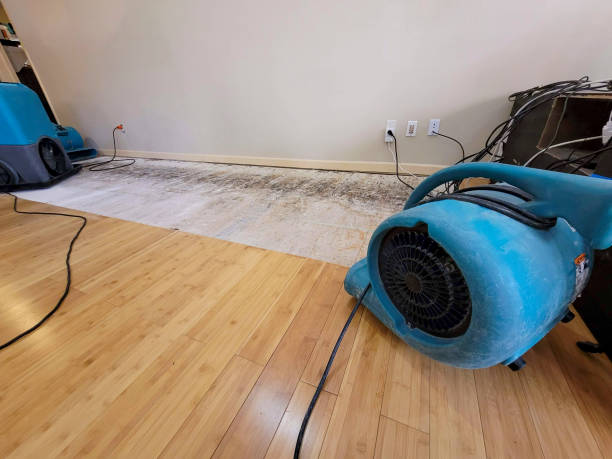
Standing water gets removed with commercial extraction equipment first, then we run moisture readings across every affected surface so the drying plan targets what's actually still wet, not what looks dry on the surface.
Drying logs track humidity, surface moisture, and airflow at every checkpoint, so you get documented proof the structure is dry before we close out the job — useful for your insurance claim too.
Our sewage cleanup protocol follows IICRC S500 contamination standards, isolating the affected area, removing unsalvageable materials, and disinfecting every surface that had contact with blackwater.
Because mold can establish in as little as 48 hours, our drying timeline is built around beating that window rather than treating mold prevention as an afterthought.
We handle everything from replacing water-damaged drywall and insulation to refinishing floors, so the property is restored to pre-loss condition under one contract instead of three.
Specialized cleaning techniques can often save upholstery, electronics, and documents that look like a total loss at first glance, which keeps out-of-pocket replacement costs down.


You call +1-844-234-5373 and speak with a live dispatcher, not a voicemail system — we ask a few quick questions about the source and severity so the crew arrives prepared.
We document the loss with photos and moisture readings before touching anything, which also protects your insurance claim.
We set drying equipment based on the specific moisture readings taken during assessment, not a generic placement pattern.
Once moisture readings confirm the structure is dry, we hand you documentation and move into any needed reconstruction.
Every technician carries IICRC certification and our crews are fully insured for your protection on every job.
A crew close by isn't a marketing line — it's the difference between drying equipment running in an hour versus waiting half a day.
We'd rather explain the cost clearly upfront than have that conversation after the job is already underway.
If a drying target isn't met on the first pass, we extend equipment placement at no extra charge until moisture readings confirm the structure is dry.
If our moisture readings don't hit a safe drying standard on schedule, we keep equipment on site at no additional cost until they do — that's the standard we hold ourselves to.
That same standard applies whether it's a single flooded bathroom or a full commercial loss — the sign-off criteria don't change based on job size.
Call +1-844-234-5373Whether your address falls in 98576 or one of the neighboring zip codes we cover, the same crew and the same response standard applies.
Coverage isn't limited to the city center — our Rainier routes extend out to the surrounding suburbs so outlying addresses aren't treated as an afterthought.

"The team here in Rainier treated our emergency like it actually mattered, not like another ticket in a queue, and the drying documentation they left us was thorough enough to hand straight to our insurer."
James R., Rainier"What impressed me most was the daily moisture log — I could actually see the numbers improving instead of just being told to trust the process."
Denise M., Rainier"Professional from the first phone call to the final walkthrough. They re-tested moisture levels before closing the job instead of just eyeballing it."
Marcus T., Rainier"Fast response, clear pricing, and they coordinated directly with my insurance adjuster which saved me a huge headache during a stressful week."
Priya S., Rainier"We had a slow leak we didn't notice for weeks and the crew found moisture in places we never would have checked using thermal imaging."
Carlos V., Rainier"Our commercial unit flooded overnight and they had industrial equipment running before our staff arrived for the morning shift."
Angela F., Rainier"The tech explained exactly which boards needed to come out and which ones tested dry enough to keep, so we didn't pay to replace more than necessary."
Tyrone B., Rainier"Storm runoff got into our crawl space and the smell alone told us something was wrong. The crew found the vapor barrier had failed and fixed the actual cause, not just the symptom."
Wendy K., Rainier